













Retina
Latest News
Advertisement
CME Content
Advertisement
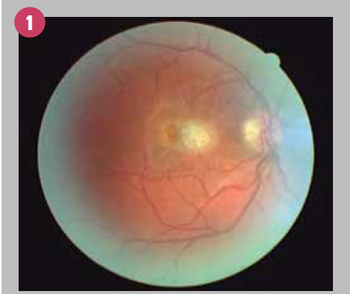

Undiagnosed ocular trauma could lead to more complicated ocular problems for patients if left untreated. Leo P. Semes, OD, FAAO, looks at one case in which optical coherence tomography angiography (OCT-A) helped diagnose and treat a patient successfully.

Richard Carvajal, MD, associate professor at Columbia University Medical Center, discusses one drug potential to treat ocular melanoma at ARVO 2018 in Honolulu.
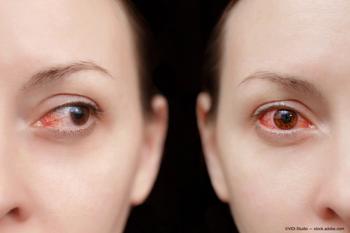
Scratches by young felines can lead to ocular complications. Find out how a patient’s floater led to a referral and diagnosis of cat-scratch neuroretinitis.
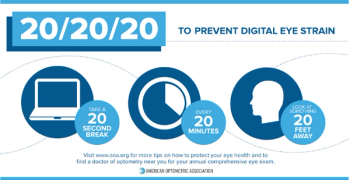
Many ODs recommend the 20-20-20 Rule to patients to help alleviate eye strain from digital device usage. But few know its origins. Brian Chou, OD, FAAO, FSLS, digs deep to discover who coined the tagline and why.
Since its FDA clearance, the significant potential of OCTA has been emphasized.

A 26-year-old healthy ophthalmically asymptomatic female patient attended the University of Alabama School of Optometry clinic for a periodic ophthalmic evaluation. Her history was significant for myopic refractive correction, for which she wore soft contact lenses successfully.

A 16-year-old female was scheduled for her periodic ophthalmic evaluation to update her spectacle lens prescription. At the visit, she reported a history of migraines, but the remainder of her personal and family medical history was non-contributory. She took no medications and had a history of low hyperopic refractive correction.
Treatment of posterior segment disease is in the midst of a paradigm shift, says a panel of experts at this year's annual SECO 2017 conference in Atlanta.
One morning, as a few faculty members were squeezing in a workout before work, the topic arose of how to use the red-green (Duochrome) test most efficiently in clinic.
OCT is one of the best way to assess patients for the presence of diabetic macular edema (DME)
Microperimetry aids diagnosis, and supplements increase circulation
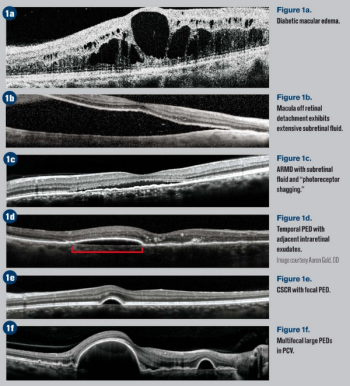
Optometry has widely adopted optical coherence tomography (OCT) as a mainstay in diagnosing and managing ocular disease since its advent in the 1990s
Recently, there has been interest by pediatric ophthalmology in protecting our most valuable retinal real estate, the fovea, with dietary zeaxanthin
An artificial retinal prosthesis allows patient with retinitis pigmentosa (RP) to locate objects, detect movement, and improve orientation and mobility skills.
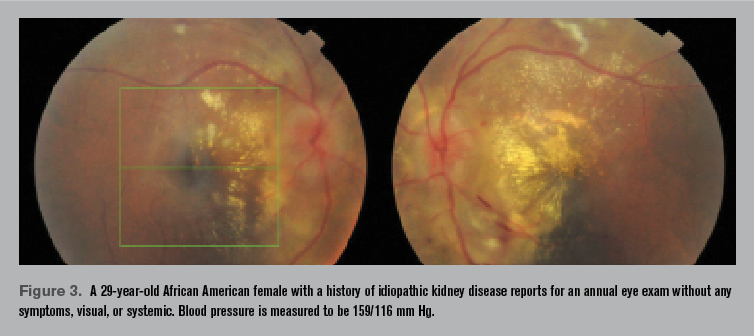
A 37-year-old male came to my office for the first time in 2014 for a diabetes eye examination at the insistence of his primary-care provider (PCP).
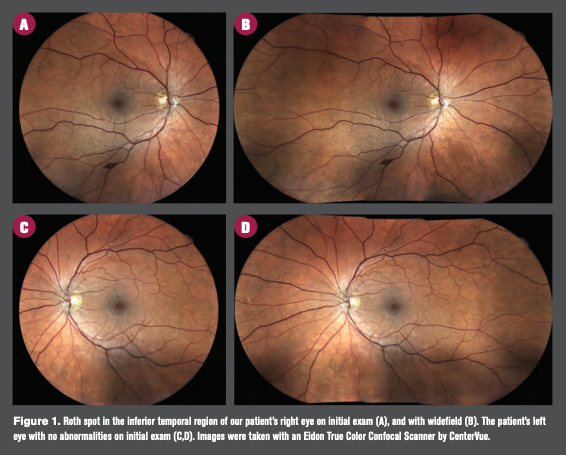
Roth spots are hemorrhages in the retina with white centers. They occur in a wide variety of systemic conditions that are associated with retinal hemorrhages.
At her periodic eye examination, a female patient in her early 70s was discovered to have low-risk macular degeneration in each eye. Further evaluation revealed that her visual acuity (VA) was correctable to 20/25 in each eye.
Advertisement
Advertisement
Trending on Optometry Times - Clinical News & Expert Optometrist Insights
1
FDA approves phentolamine ophthalmic solution 0.75% (Ryzumvi) for presbyopia
2
FDA approves Brytly eye drops for ocular redness relief lasting up to 12 hours
3
Missed AAOpt 2026? Here are the highlights by specialty
4
FDA approves subcutaneous Enspryng for TED
5