













Retina

Latest News


CME Content


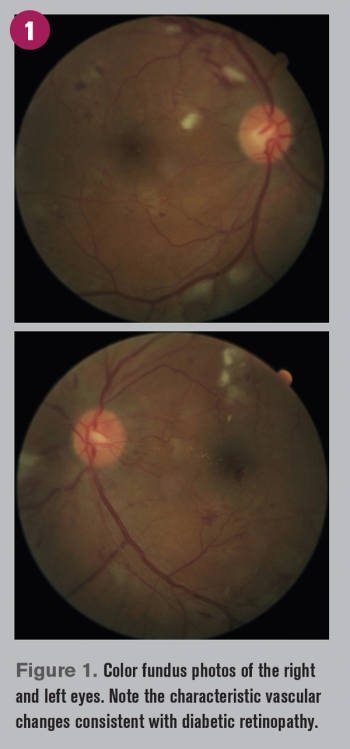
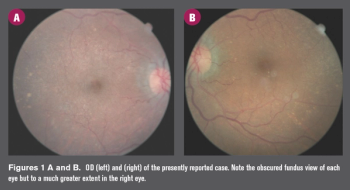
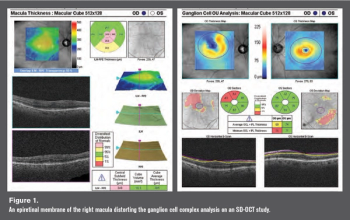
Recently, a colleague wrote me to express his concern about a primary care physician (PCP) in his community acquiring digital retinal photographs of his diabetes patients. One of those patients presented to the optometrist’s office with the impression that “all he needed was a refraction” since the PCP had “already checked him for diabetic retinopathy.”

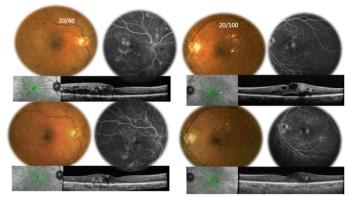
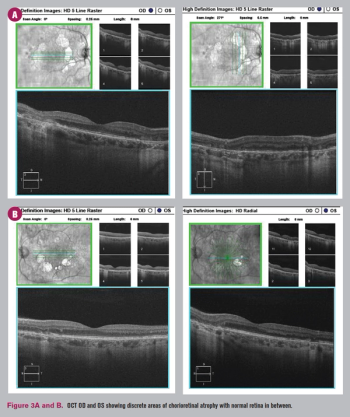
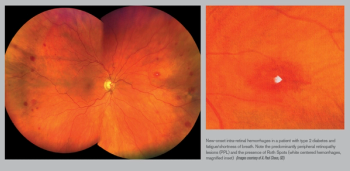
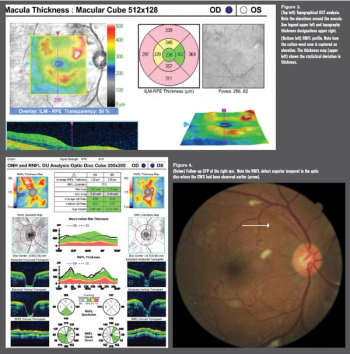
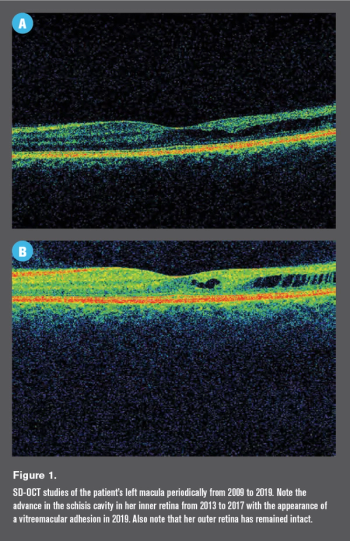
A 76-year-old white female presented for her periodic diabetic eye examination at UAB Eye Care in July 2014. She admitted to blurry vision in her left eye for approximately one week.

According to a report from GlobalData, the age-related macular degeneration treatment market in the U.S., UK, Germany, France, Spain, Italy, and Japan will double in value from $5.1 billion in 2013 to $10.1 billion in 2023.

Konan Medical recently launched EvokeDx, the next-generation visual pathway diagnostics platform to assess visual evoked potentials (VEP) and electroretinograms (ERG).

An article recently published in Current Opinion in Ophthalmology looked to help eyecare practitioners understand the costs of genetic testing in ocular disease, the complexities of insurance coverage, and its impact on the availability of genetic testing.

The U.S. Food and Drug Administration recently approved VisionCare Ophthalmic Technologies’ Implantable Miniature Telescope for use in patients living with bilateral end-stage age-related macular degeneration (AMD) who are age 65 or older.

The American Academy of Ophthalmology says that close to one-third of the nation's eye physicians and surgeons are participating in the Intelligent Research In Sight (IRIS) Registry, which is the first comprehensive database of eye diseases and conditions in the United States.

According to the National Eye Institute (NEI), 7.7 million people age 40 and older have diabetic retinopathy, and this number is projected to increase to approximately 11 million people by 2030.

During the American Academy of Optometry's Academy 2014, presenters shared how optometrists can help halt the diabetes epidemic and combat associated ocular complications.

For any treatment to be successful, early detection is key. For that reason, genetic testing may play a role in determining the frequency of follow-up in patients who are determined to have high-risk alleles.

The U.S. Food and Drug Administration approved VisionCare Ophthalmic Technologies’ implantable miniature telescope for use in patients living with bilateral end-stage age-related macular degeneration (AMD) who are age 65 or older.

Heidelberg Engineering GmbH recently launched two new products, OCT2, the next generation OCT module for Spectralis diagnostic imaging, and the Heyex picture archiving and communication system (PACS).

Genetic testing in AMD is a relatively new focus for optometrists and an important one to ensure that we are getting a complete view of our patients’ risk for developing advanced AMD. Although we are making some progress, we still have work to do to gain a better understanding of how to incorporate its use into clinical practice.

Ohr Pharmaceutical recently announced details of the planned Phase III registration trials for squalamine eye drops (OHR-102) in the treatment of wet age-related macular degeneration (AMD), which are being designed based on guidance provided by the U.S. Food and Drug Administration (FDA) at a recent "end of Phase II" meeting.

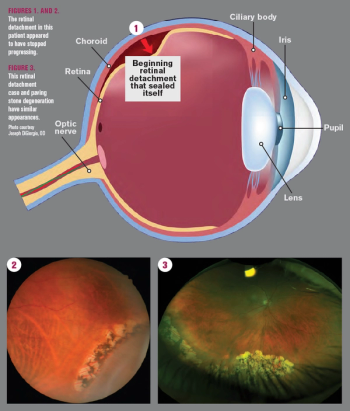
When the retina in my left eye detached in early October 2013, I was on a tour bus, somewhere between Canter’s Deli and Griffith Observatory, in Los Angeles. There was a series of flashes, like warning flares, and then a black tide, an oil slick of a blind spot that started down and to the left and crept toward the center of my vision, arcs of lightning heralding its advance. I knew what was happening, but I didn’t want to believe it.